
Move the chest toward the people
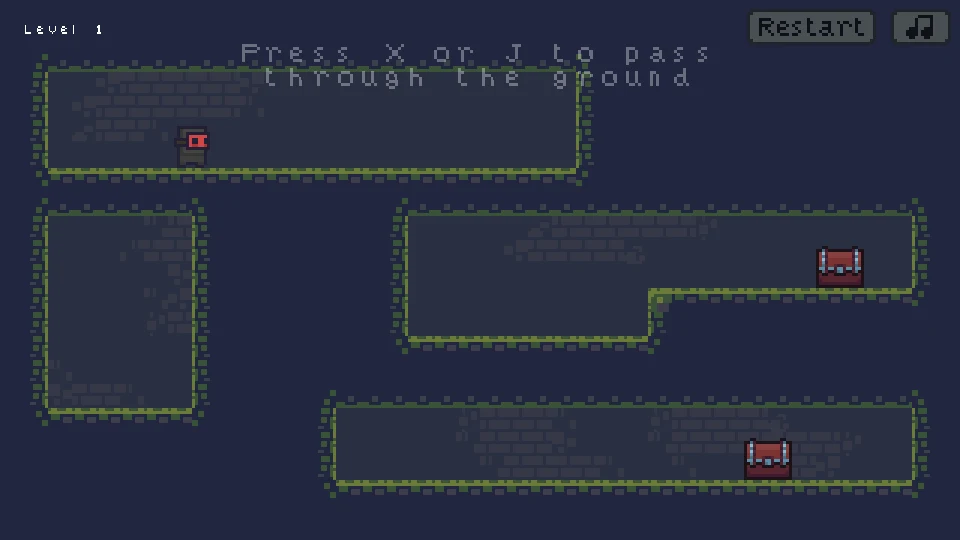
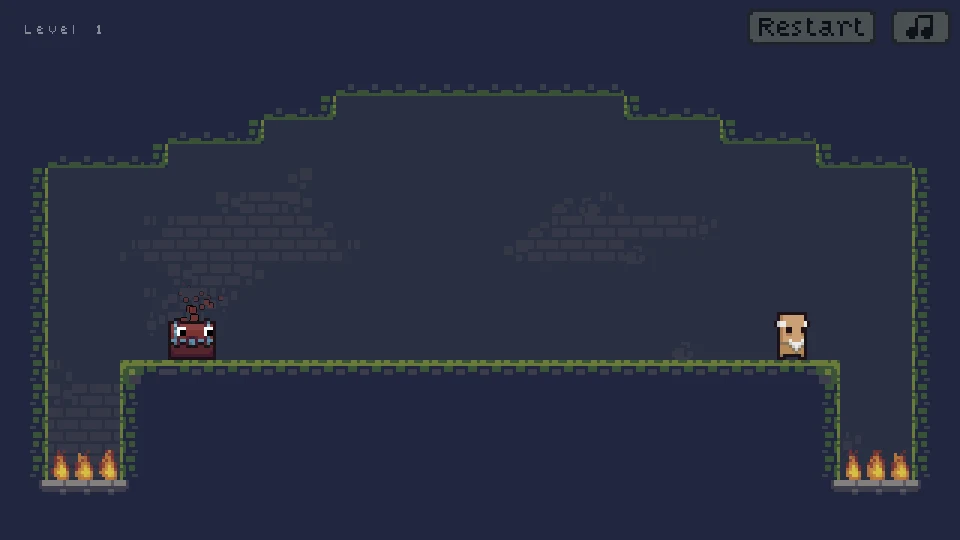
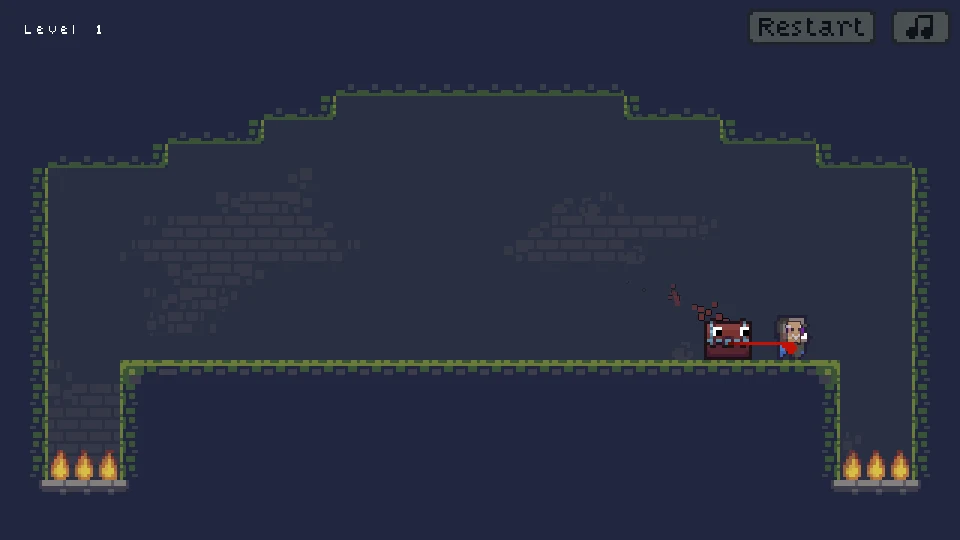
Greedy Mimic puts you in control of the small chest with a mouth. Its tongue changes people into ogres, while jumping and stomping determine how the mimic reaches them. The first room keeps the target on the same long platform as the player, with dangerous drops and flames at the ends. This is a good place to learn the tongue’s actual reach before the game adds raised platforms and moving targets.
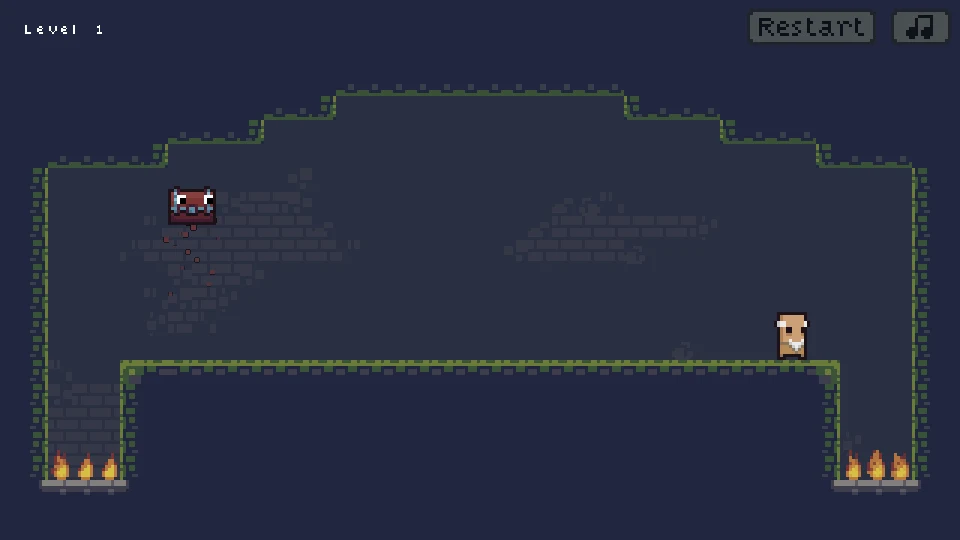
Follow the character change as well as the mimic’s position. A person who has been reached by the tongue no longer looks like the original human target. That change is useful feedback, distinct from merely standing beside somebody or opening the mimic’s mouth from far away. Work through the room’s human targets and watch for the transition to the next layout. Later rooms put those targets on different heights, so movement becomes part of the interaction rather than a separate warm-up.
Why does the tongue miss a person I can see?
Use A and D or the arrows to move, W or up to jump, S or down to stomp, and X or J to eat. The tongue is not a full-screen selection tool. In the opening room, an attempt made while the mimic was well short of the right-hand person left that target unchanged. Moving closer before using the same action produced a visible change. Visibility and reach are different conditions.
Approach on the safe central platform, face the target and leave enough floor behind the mimic to stop comfortably. Try one tongue action and inspect the result before pressing again. If the person is unchanged, check both distance and facing. Do not run straight off the edge while repeating X. The flames at the end of the platform mean that a failed tongue attempt can become a movement failure if you keep chasing the target without watching where the chest’s feet will land.
Use the first room to separate movement from interaction
The initial floor gives you room to test a short approach, an out-of-range attempt and a closer attempt without adding a difficult jump. Keep the mimic on the platform and note the target’s appearance before using the tongue. After contact, compare it with the changed figure. This establishes what progress looks like in the game before the later rooms make several characters compete for your attention.
Do not use every available action simply because it has a key binding. The first target is on the same floor, so a stomp is not the missing ingredient in a distant tongue attempt. Move into reach and use the interaction that matches the target. When the room changes, take a moment to locate the new people and hazards. The second layout is not a continuation of the same flat walk, even though the mimic and its keys remain familiar.
Read the ceiling before jumping at a raised person
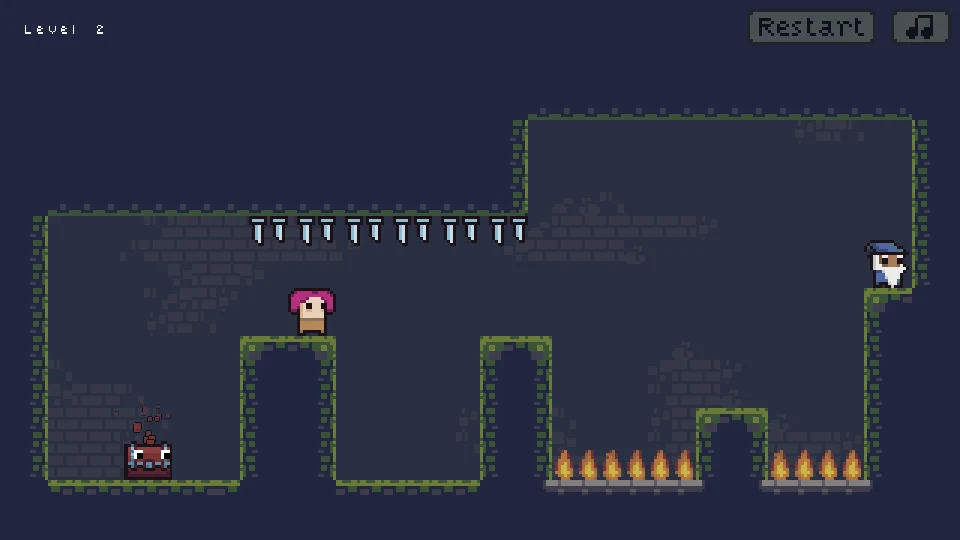
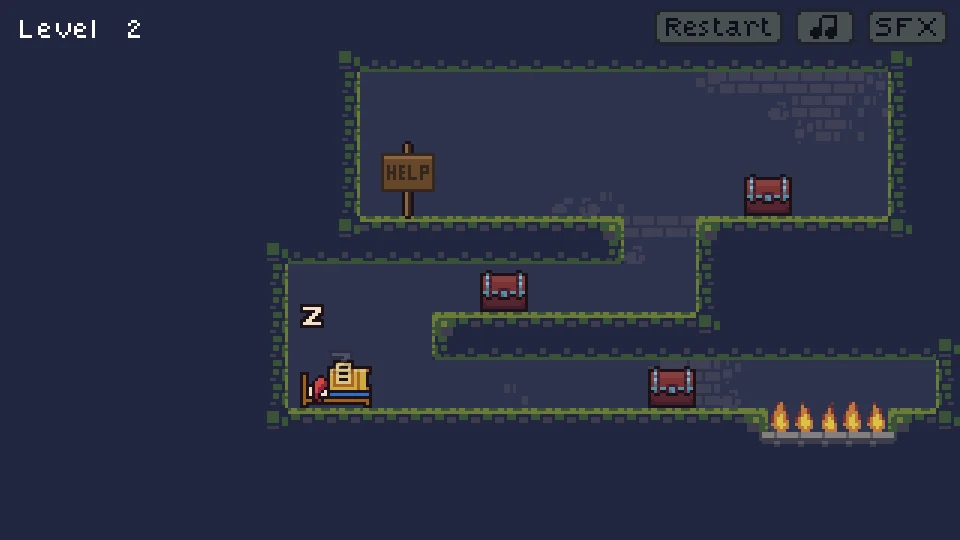
The second room places a person on a narrow central column and another on the high right side. Flames occupy the low spaces farther right, while spikes hang beneath the upper ceiling. Looking only at the floor gives an incomplete route. A high jump toward a visible person can also carry the mimic’s head into the spike row above that person’s platform.
Choose a departure that brings the tongue to the target’s height without treating the entire ceiling as empty space. The narrow column provides little room for an uncontrolled sideways landing. Separate the vertical part of the approach from the final adjustment toward the person. If the mimic repeatedly hits the column’s side, begin the jump from a more useful position; if it rises into the spikes, change the route or the amount of upward travel. Those outcomes call for different corrections, even when both look like a missed jump.
Stomp is a different decision from eating
S or the down arrow triggers the stomp. On the first room’s safe floor, pressing it while already standing did not create an ordinary jump. During a jump, it drove the mimic down with a visible impact effect, followed by a strong upward rebound after the floor contact. That makes the surface beneath the mimic part of the move: a solid platform can produce a useful rebound, while a flame-lined gap cannot provide the same safe setup.
Use the rebound as a separate stage of a raised-target approach. Begin with enough clear floor for the downward contact, watch for the upward response, then move toward the ledge you want to reach. Do not begin the stomp over spikes simply because the target is higher. In the second room, the central column and ceiling spike row make both the departure floor and the space above the eventual landing relevant. Eating still uses X or J; stomping changes the movement state and does not extend the tongue’s range.
Moving targets change what the tongue can reach next
Later rooms introduce bats between separated platforms. A bat is a moving interaction opportunity, unlike the stationary person on the opening floor. Watch its path before launching toward it. The relevant position is where the bat will be when the tongue reaches it, not where it was when you first looked across the gap. A miss can leave the mimic airborne without the interaction you expected, so identify a recovery surface before chasing the bat.
Ghost rooms add another visible state to read. Stars can appear around ghosts during the action sequence, and the mimic can then move through a layout that was dangerous moments earlier. Treat that as a temporary condition to observe, not a promise that a ghost remains harmless indefinitely. When a bat and a ghost are close together, inspect which contact actually occurred. Do not assume every tongue press on a busy screen produces the same movement result as eating a person on solid ground.
Change the cause of the failure, not every key
R restarts the room, M mutes sound and Escape opens the menu. Use a restart to test a specific change. For a tongue miss, adjust reach or facing. For a collision above a target, inspect the ceiling route. For a descent into flames, move the departure or choose a different landing. Pressing X sooner cannot repair a jump whose entire path passes through ceiling spikes. Keeping these causes separate makes a short room much easier to learn.
A transformed figure is also a cue to reassess. Look for the human targets that still need attention instead of treating every character as unchanged. In a room with people at several heights, the useful next action may begin from the platform you just reached. Read the new position before restarting a working attempt. The mimic’s unusual combination of tongue, jump and stomp is most manageable when each action has a clear purpose and leaves you able to judge the next one.
Which room sequence should I expect?
The browser game includes a fifteen-level sequence. Older ten-level recordings can stop before the later layouts or arrange the same learning problems differently. Use the current room’s geometry and visible target states when following an example. A familiar title screen does not mean an older route covers every room you are now playing. The first flat interaction and the early raised-target rooms remain useful places to establish the controls directly.
A desktop keyboard suits the separate tongue and stomp buttons. Click into the game before starting a combined movement, and try J if X is uncomfortable beside your chosen direction keys. Enlarging the player can help distinguish a bat, a ghost and the ceiling spike tips, but fullscreen does not change tongue reach. Retry Game is for a failed host connection; R is for a running room that needs another attempt. Start by making the first target interaction reliable, then carry that clear feedback into the more crowded layouts.